Ach, Dun, Kil, Ness: The Place Names That Turn a Scottish Print Into Yours
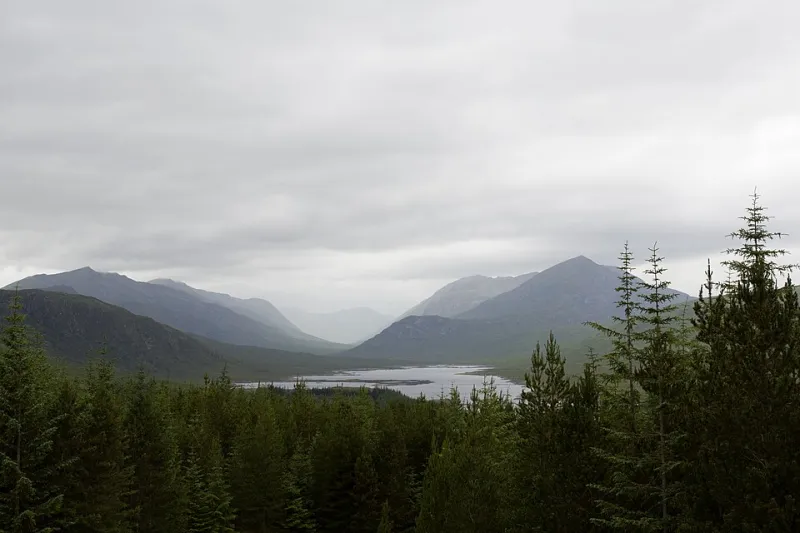
Photo: Hikideas, CC BY-SA 4.0, via Wikimedia Commons
A print labelled simply 'Scottish Highlands' can be lovely. A print labelled with the glen your grandparents came from, or the loch you walked around on a wet Tuesday in 2019, is a different thing altogether. Place names are one of the quiet reasons some Scottish prints stay on a wall for years while others get rotated out.
This is not a linguistics lecture. Think of it as a buying aid: a rough guide to the words that turn up on Scottish landscape and heritage prints, and a way to spot the difference between a generic view and one that connects to a real corner of Scotland.
Why the words on the print matter
Most of us do not have a map of Scotland in our heads. We see a print of a moody loch, like the colours, and move on. But the caption underneath is doing a lot of work. It might point to a family surname, a childhood holiday, a favourite walk or a city someone moved away from. In a gift, that small line of text can be the difference between 'nice picture' and 'how did you know?'.
Scotland's place names are layered. Gaelic, Scots, Old Norse and English all left marks, and some names have been worn down by centuries of use. You do not need to become an expert to use them well. You just need a few common elements and a bit of curiosity.
The building blocks: ach, dun, kil, ness and friends
These are not strict dictionary definitions — place-name meanings can shift from one parish to the next — but they are useful clues.
Ach or Auch often comes from Gaelic achadh, meaning field or meadow. Think of Achnasheen or Auchterarder. If a print shows a small settlement or a green patch in a bigger landscape, this is a good element to look for.
Dun usually points to a fort or hillfort. Dunoon and Dumbarton carry it, and it suits prints with a sense of old defences, raised ground or a tough little coastal town.
Kil is often linked to a church or a saint's cell. Kilmarnock, Kilmartin and Killearn all carry it. For heritage prints, this is a strong clue that the place has an old religious or community site at its heart.
Ness is a slippery one. As an ending it often relates to a headland or promontory, as in Durness. In Inverness it attaches to the River Ness, so context matters. If a print says Ness, check whether it is the river, the loch or the headland before you assume.
Inver means a river mouth. Inverness, Inveraray and Inverurie all sit where water meets something else. These names suit prints with bridges, harbours or that meeting-point feeling.
Strath is a broad valley, often with a river running through it. Strathspey and Strathclyde are the famous examples. Glen is the narrower, more dramatic cousin — Glencoe, Glenfinnan, Glen Lyon. If you want a print that feels like a journey into the hills, a glen name is hard to beat.
Ben means mountain, as in Ben Nevis. Loch covers both lakes and sea inlets, which is why it appears on so many prints. Craig is a rock or crag. Port is a harbour. Ard often suggests a height or headland. Kirk is church, thanks to Scots and Norse influence, as in Kirkcudbright.
Pronunciation pitfalls (and how not to worry about them)
You will see 'loch' printed on everything from tea towels to fine-art prints. It is not 'lock'. The ending is a soft, throaty sound that many English speakers do not have in their everyday speech. That is fine. A decent attempt is better than a confident wrong one.
A few others trip people up. 'Kil' is usually more like 'kill' than 'keel'. 'Dun' is short, not drawn out. 'Strath' rhymes with 'bath' in a Scottish accent, not with 'maths'. 'Ness' is crisp and short. And 'Caledonia' is a romantic Roman-era name for Scotland, not a place you can visit — so if a print uses it, treat it as a mood rather than a map reference.
If you are buying a gift for someone with family roots in Scotland, do not guess in the card. Check the pronunciation with a local, a native speaker or a reliable online dictionary. It is a small courtesy that makes a personal gift feel considered rather than gimmicky.
From name to print: a simple buying check
First, match the place to the person. A print of the Clyde might suit someone who left Glasgow; a small study of a Highland glen might suit a walker; a kirk or kil name might suit someone tracing family history. The image still has to work in the room, but the name gives it a job.
Second, check that the location is specific. 'A Highland Loch' is a mood. 'Loch Fyne, Argyll' is a place. If a seller cannot tell you roughly where the view is, that does not make the print bad, but it does make it harder to build a personal story around it.
Third, look at how the name is set. Long names can look cramped on a small print. A good maker will give the text room to breathe, or leave it off the image and put it on a separate card. If the typography feels like an afterthought, the print may feel like one too.
Fourth, think about the gift note. You do not need a family tree. One line — 'This is the loch we walked round in the rain' or 'Your gran's side, apparently' — is enough. A place-name print with a story attached is far more memorable than a generic Scottish scene.
Three name-led ideas that avoid the shortbread-tin look
A single small landscape of a specific glen, with the name set discreetly beneath, works well in a hallway or beside a bed. It feels like a place, not a brand.
A heritage print of a kirk or kil site, in muted stone and moss colours, suits anyone who likes old buildings but does not want a full tartan explosion.
A city print with an older name or a lost district can be a good gift for someone who has moved away. It says 'I know where you are from' without turning the wall into a tourist shop.
A last word on respect
Gaelic place names are a living part of Scottish culture, not a decorative code. Using them well means being curious, asking when you are unsure and avoiding jokey mispronunciations on a card. Do that, and a place-name print stops being a pretty view with a caption. It becomes a small, useful connection to somewhere — and someone — specific.