Two Frames and a Postcode: Warming Up a New-Build With Scottish Prints
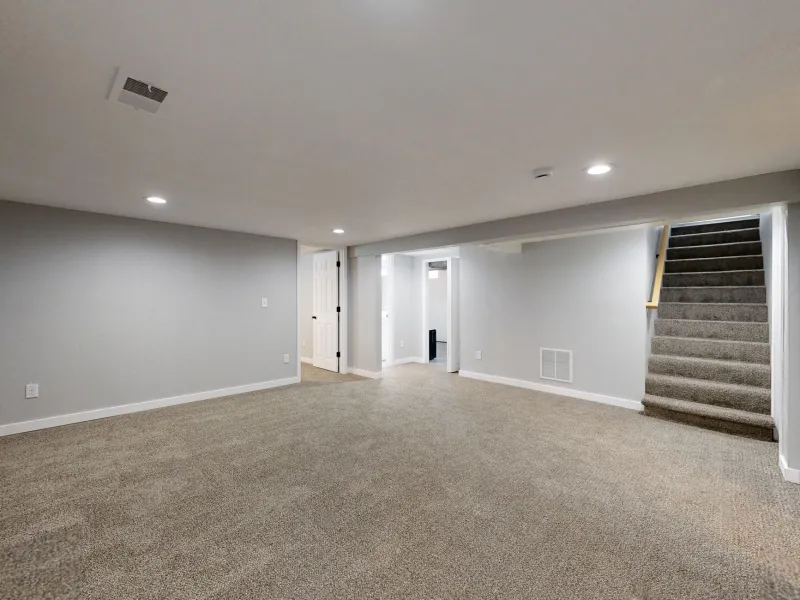
Walk into a new build and you can usually guess the plot number before you see the door. Soft grey walls, white gloss, oak-effect flooring, and a light fitting chosen by someone who has never met you. It is not offensive. It is just deeply, quietly anonymous.
The good news is that new-build spec is neutral on purpose. The developer has left the walls blank so you can make the decisions they were never going to make for you. And the cheapest, least committal decision available to you is a print — ideally two.
The problem is not beige. It is the absence of a decision
Nobody moves into a new build and feels oppressed by grey. They feel underwhelmed, because their eye has nothing to land on. Every surface is doing the same polite, inoffensive job. A framed print gives the room a full stop — somewhere for the eye to stop wandering and start resting.
It also gives you an exit route. If you get it wrong, you take out one nail and start again. Compare that with repainting the hall.
Measure before you buy, because your walls are not the walls in the brochure
Most new-build sitting rooms run to around 2.4m ceilings with a long, chimney-free wall somewhere between 3.5m and 4m. A single A4 print on a run that size looks like a stamp on an envelope. It does not read as a deliberate choice; it reads as an afterthought.
The rough rule is that art should occupy somewhere between 60 and 75 per cent of the width of whatever sits beneath it — a sofa, a sideboard, a media unit. Hang the centre of the picture around 145–150cm from the floor, which lands at eye level for most adults, and leave 15–25cm of breathing space above a sofa back. Above a bed, go wider and lower than feels natural. Five minutes with a tape measure and a pencil will save you a return postage label.
Colours that behave themselves next to grey and white
Most new-build interiors fall into two camps: cool grey and white, or the warmer greige-and-oatmeal end of things. In a cool room, prints with slate blues, wet-stone greys, muted greens and charcoal line work settle in immediately. In a warmer scheme, sandstone, ochre, rust, deep green and heather purple feel like they belong.
One detail people miss: the paper. A bright white print stock against cream walls can look like a mismatched shirt and collar. Off-white and warm-white papers generally sit better in British light. If you can, ask the seller for a photo taken in daylight, or check whether they offer a paper sample — many small Scottish print studios are happy to.
A heather moorland, a slate rooftop or a sea-fret sky is effectively a neutral. A neon sunset is a commitment.
Pick one subject with a link, not a theme
The temptation in a new build is to fill the void quickly, which is how people end up with eleven framed things and no actual style. Resist it. Choose two pieces: a landscape for the room you sit in, and a city or heritage print for the hall, where you will walk past it several times a day.
Better still, choose a place you can point to. The town you grew up in, the beach you went to as a child, the bridge you cross to see family. A Scottish print with a personal address behind it stops being decor and starts being yours.
The frame is doing most of the heavy lifting
A £15 print in a proper mount looks like a much more expensive object. Budget somewhere between £15 and £40 for the frame and mount together and you will be fine — ready-made ranges from Habitat, HAY and IKEA all do the job, and a local framer will usually beat them on quality if you are framing something sentimental.
Go for a mount of at least 5cm in off-white, and a frame moulding of 3–4cm. Perspex glazing is lighter, cheaper and safer than glass, which matters if you are hanging above a sofa or anywhere a football might travel.
Hanging it without a drama
New-build internal walls are usually plasterboard, sometimes on dot-and-dab. A picture hook rated for the weight is fine for a light frame; anything over about 3–4kg wants a proper plasterboard fixing rather than a hopeful tap with a nail. Keep frames out of the vertical line above sockets and switches, where cabling tends to run, and out of the direct blast of a radiator.
South-facing walls fade prints faster than you would think. If that is your only option, ask for UV-filtered glazing or accept that you will rotate the piece in a few years.
For anything under 2kg, adhesive strips are genuinely fine and completely reversible — useful in the first year, when you are still deciding whether the sofa is in the right place.
Live with it before you commit
Lean the frame against the skirting board for a week. Move it from the long wall to the short one. Look at it in the evening with the lamps on, which is how you will actually see it from October to March. A print that works in daylight can go flat and grey at 8pm, and a print that looks dull at noon can come alive under a warm bulb.
A starter plan for the first month
One landscape print, sized to the sofa, on the longest wall. One city or heritage print in the hall, hung at eye level so you catch it on the way out. Two frames, somewhere between £30 and £80 all in, and the box stops being a box.
Everything else can wait until the mortgage has stopped making you wince.